
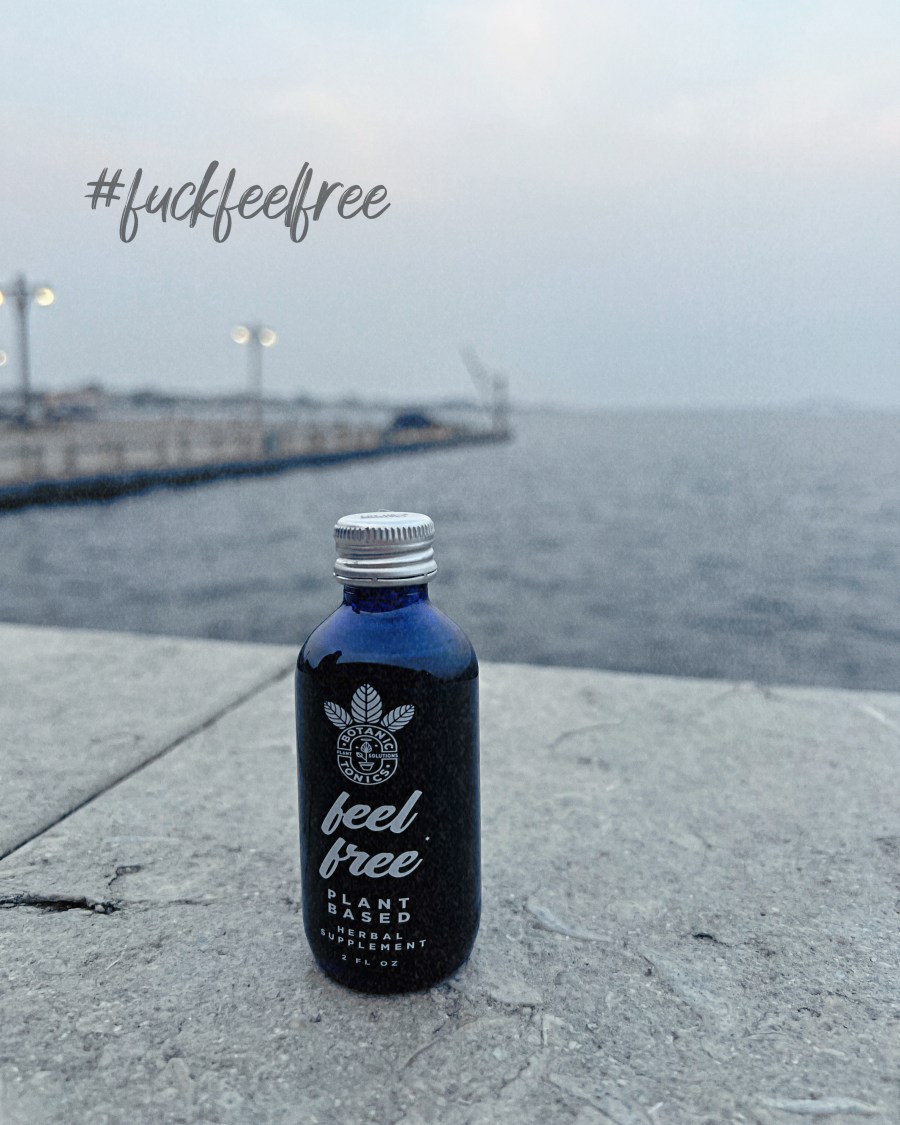
Well, here we are again. Another year, another “oops, I forgot to cancel my website domain,” which means it’s time for me to share something deeply personal. Fuck it—let’s dive in.
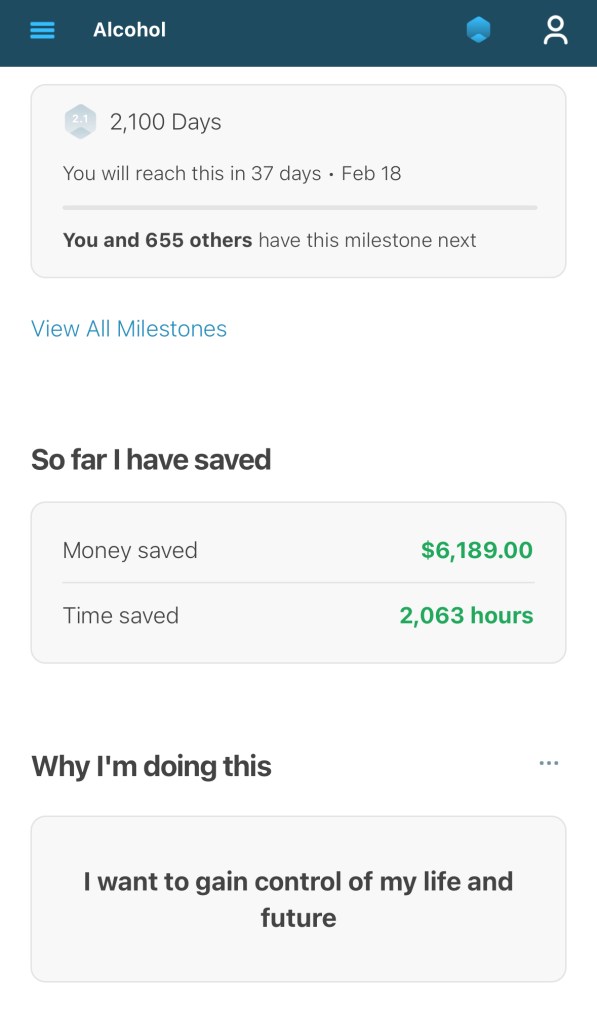
So, here’s my cautionary tale of how I sort of accidentally got addicted to a so-called “wellness tonic.” Yep, you read that right. Me, a person who’s been sober from alcohol for 5 years, 7 months, and 22 days, found myself hooked on a little bottle of liquid marketed as a health drink. I don’t even check my sober app anymore unless it’s my anniversary, but I logged in while writing this to confirm the exact number of days since I quit drinking. And there it was, staring me in the face: the reason I quit alcohol in the first place—“I want to gain control of my life and future.” Heartbreaking, right? Because here I am, realizing that these little bottles of Feel Free have done the exact opposite. They’ve taken away the control I fought so hard to gain.
What the Hell is Feel Free?
Before we get into the nitty-gritty, let me explain what Feel Free is. It’s a two-ounce tonic extract that combines two plants: kava and kratom. Both have been gaining popularity as alcohol alternatives, and while that sounds great in theory, there’s a darker side to this story.
Kava is known for its relaxing effects and is often brewed into teas or served at kava bars. It’s not addictive, and honestly, I still enjoy it from time to time. Kratom, on the other hand, is a different beast. It interacts with the same receptors in your brain as opioids and can be highly addictive. Spoiler alert: Feel Free contains kratom—and not just a little bit—but they didn’t exactly make that clear on the label for years. In fact, at one point, Feel Free didn’t even list kratom as an ingredient at all, making it impossible for people who were trying to educate themselves to know what they were consuming. A lawsuit has even claimed that Botanic Tonics advertised Feel Free as a “safe, sober and healthy alternative to alcohol” without clearly disclosing the side effects of kratom, leaving consumers unaware of the risks.

Oh, and there are rumors that Feel Free ferments their kratom, which allegedly makes it even more addictive. People have also claimed that kratom can cause false positives on drug tests for hard drugs like MDMA. Now imagine the chaos when you realize Feel Free was the official tonic of various college athletic teams—teams whose athletes are liable to be randomly drug tested. I believe those relationships have since ended, but still—wild.
How It All Started
My journey with kava and kratom began innocently enough. When I first quit alcohol, I discovered kava bars, and they were a godsend. On my first sober birthday, I dragged my friends to one in the city. It was the best birthday I’d had in years—just me, my crew, and a space where I could feel normal without alcohol. That night, I stuck to kava, but I noticed something intriguing behind the bar: a little bottle called “Stinger,” a kratom extract. I didn’t think much of it at the time, but that was my first taste of kratom.
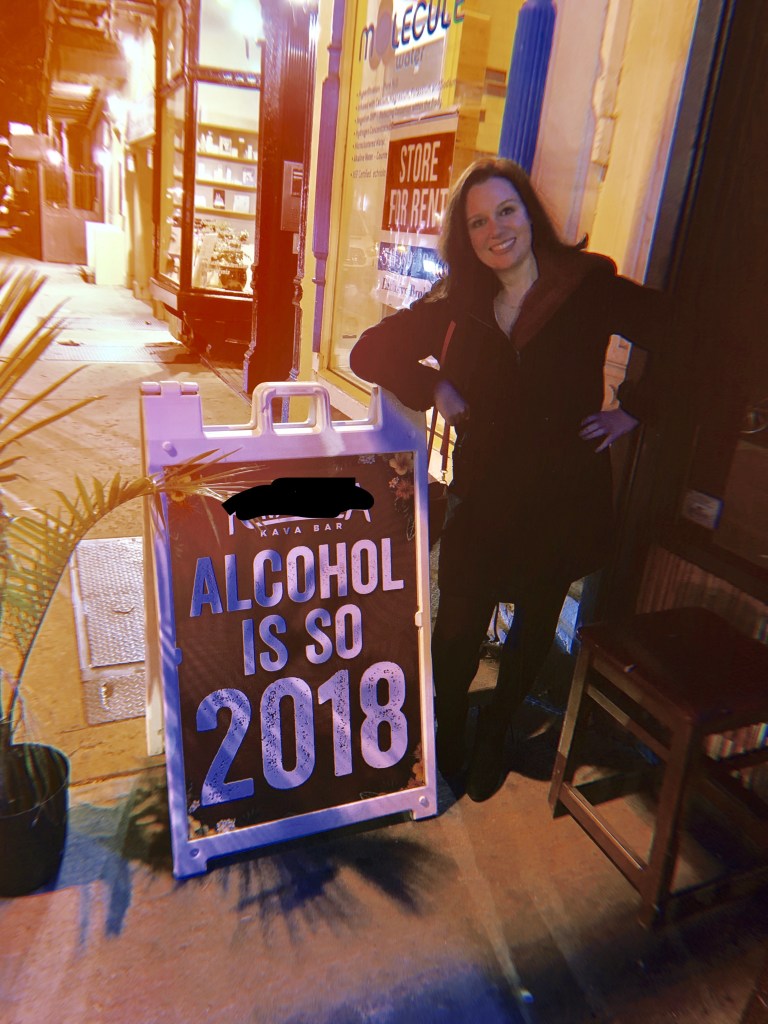
Fast forward to a few years later, and kava bars started popping up in my area. I was excited to have a place nearby where I could grab fresh-brewed kava, which is way better than the instant powder I’d been ordering online. But then I saw they had kratom tea. I remembered liking the Stinger extract from before, so I gave it a shot. Literally. I even took home a growler of the tea that day, and it became a regular thing. I liked the energy boost it gave me, and for a while, it felt harmless.
Enter Feel Free
My first encounter with Feel Free was at one of these kava bars. The bottle claimed to contain kava and a “proprietary blend” of other plant extracts. What it didn’t clearly state was how much kratom was in it—or as I mentioned before, that kratom was even a main ingredient. This lack of transparency is what makes Feel Free feel so much ickier to me than other clearly marketed kratom products. They tried to market themselves as a kava-based wellness drink, conveniently glossing over the kratom content for as long as they could.
To make matters worse, combining kava and kratom can possibly amplify their effects, making the drink even more potent. And because kratom doesn’t make you appear “high” in the traditional sense, it’s an easy addiction to hide. Like I said, at a certain point, I did know there was a potential for risk with kratom, but I hadn’t shown any signs of a problem yet, so I convinced myself my issue must just be with alcohol. I was “California Sober,” meaning I still smoked weed and didn’t abstain from all substances that could alter my state. AA can be very strict about this. For example, kava wouldn’t be allowed if you wanted to be successful in AA, and that’s probably another reason why AA never worked for me. Some people wouldn’t consider me sober at all, and I always make the distinction that my sobriety is from alcohol. But I’ve learned that sobriety has many shades of gray, and I’ll never knock what works for someone else’s journey. At that point, I didn’t do any “hard” drugs and only had an issue with alcohol, so I didn’t see a problem with my occasional use of kratom.
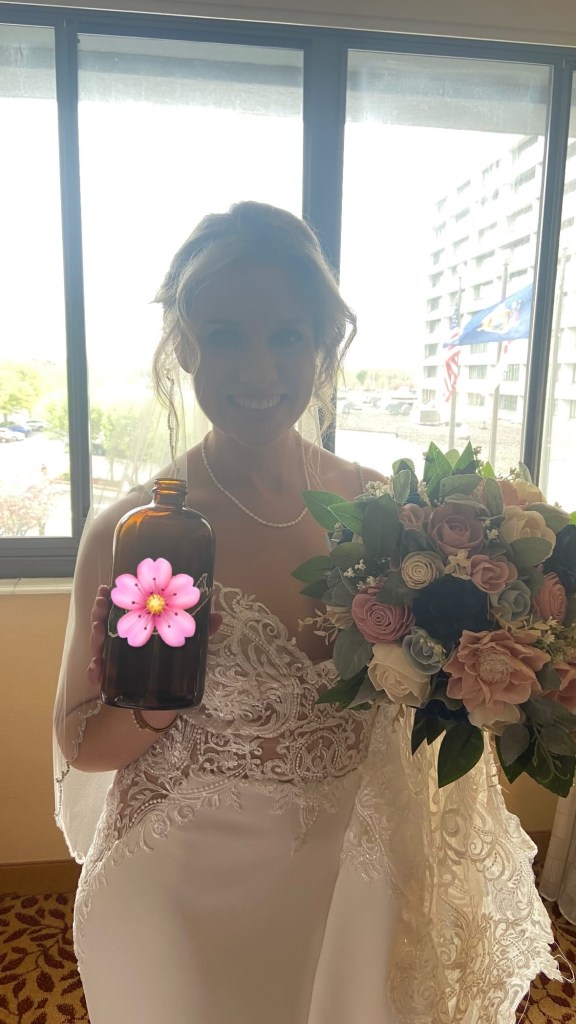
At first, I thought I could manage it. I’d have a bottle here and there, usually at social events where I didn’t want to feel left out. I even served kratom tea at my wedding, thinking it was just another fun, harmless alternative. But soon, it became an everyday thing. Then multiple times a day. I started ordering capsules to use on days between trips to the kava bar, but eventually, I got tired of waiting for the mail. That’s when I discovered that every smoke shop in my area carried kratom, and not just the capsules or tea—I found kratom extracts. Extracts are exponentially more potent. The first one I tried was called OPMS, and they were $20 a pop. I told myself I’d only use them occasionally for parties or an energy boost, but it quickly escalated to daily use, then multiple times a day.
I told myself, “Shit, this is getting expensive, and I’m having way too much—I need to slow my roll.” Then, one day, I found a smoke shop that carried my old friend Feel Free. They were only $10 a bottle and also had kava, which I loved. At this point it was now known it contained Kratom, but I was still unclear on how much. I thought I’d be saving money by purchasing Feel Free and that it might help me taper down my use. But boy, was I wrong. My local smoke shop even started giving me deals on cartons because I was such a regular. If that’s not a red flag, I don’t know what is.
The Downward Spiral
Things really hit the fan on my honeymoon. I didn’t bring any Feel Free with me because, hello, they’re liquid, and I honestly wasn’t sure if kratom was legal in St. Thomas (fun fact: it’s not legal everywhere). But I had to have something, so I brought some kratom capsules, thinking they’d less risky to bring and be enough to tide me over. Spoiler: they weren’t. Capsules were actually the only form of kratom I could keep in the house for more than a few days without devouring them because, let’s face it, they just didn’t pack the same punch as the mysterious, turbocharged Feel Free proprietary blend. I didn’t realize how much of a drastic cutback the capsules would be, nor did it even cross my mind that I could go into withdrawal.
By the second night, I was a mess. I couldn’t sleep, my legs wouldn’t stop twitching (hello, restless leg syndrome), and I was drenched in sweat. At first, I thought it was just the tropical heat—I mean, I was in St. fucking Thomas, after all—but then it hit me: I was in withdrawal. Fucking kratom withdrawal. On my honeymoon. During the day, I managed to scrape by, convincing myself I was just sweating buckets because of the sun and humidity. Plus, I’d bought a pot brownie from a local, which I hoped would help me chill out. Spoiler again: it didn’t. If anything, it just made me feel like I was in some weird fever dream where I was simultaneously too hot, too twitchy, and too stoned to function.
The nights, though? Absolute hell. I tossed and turned, jolted awake with anxiety, and wrestled with legs that seemed to have a mind of their own. If you don’t know what restless leg syndrome is, go ahead and look it up—it’s like your legs are trying to moonwalk out of your body while you’re lying there helpless. I even tried popping Advil PM and melatonin to knock myself out, but fun fact: those can actually make withdrawal and RLS worse. Oops!
By the end of the trip, I was a shell of myself. The lack of sleep, constant sweating, and overall misery had started to pile up, and I was slowly becoming more and more miserable—on my honeymoon. It eventually dawned on me that it wasn’t just the heat or the travel stress. It was the fucking kratom. When I finally put two and two together, I told my husband, and we started doing some research. That’s when we learned more about kratom withdrawals and just how addictive it could be.
I made it about 15 days without kratom after that trip, and I even started sleeping again around day seven. I promised my husband I’d never touch kratom again because, understandably, he was worried. And I meant it—I really did. And I meant it—I really did. My husband had been with me through my alcoholic years as well as my sobriety journey, and it broke my heart to think he might have to go through it all over again. That year was packed with weddings and events, and I hadn’t yet learned how to socialize or party without my trusty Feel Free. In fact, one of the only reasons I’d gotten so comfortable with not drinking around others was because of kava and kratom. (And honestly, a part of me will always be weirdly thankful for that.)
So, come the first wedding after quitting, I caved. I told myself I’d just have one bottle of Feel Free for the event. Just one. But one turned into two, two turned into six, and before I knew it, I was back to hiding bottles, puking from overuse, and scoring deals on cartons at my local smoke shop like some kind of Feel Free VIP.
Things Started Getting Out of Control
At my worst, I was drinking six to eight bottles of Feel Free a day. I was hiding it from my husband, puking regularly, and draining my bank account. Despite all of this, I convinced myself it was helping me focus and giving me energy, though the reality was far different. My workouts were suffering, my body was shutting down, and I’d wake up every morning in withdrawal (just from taking 7hrs to sleep off) panicking if I didn’t have a bottle within an hour.

I had promised my husband I wouldn’t take kratom again, and it broke my heart to hide it from him. I tried tapering but couldn’t do it, and I was too scared to quit cold turkey after experiencing withdrawal before.
Eventually, I told my husband the truth and reached out to my old addiction therapist. We discussed options, and ultimately, we decided on medication-assisted treatment (MAT) with Suboxone. This was a big, controversial step as opinions are divided on MAT for kratom addiction. Some people swear by it, while others think it’s too extreme. But for me, it felt like the best option.
I’ll go into more detail about my experience with Suboxone and how it works in Part 2, but I’ll leave you with this: the Suboxone worked really well at first—until it didn’t. Somehow, because I’m me, I managed to relapse even while on MAT. What followed was a dark, painful cycle of trying to quit and falling back into addiction.
Final Thoughts (For Now)
If you’re struggling with kratom addiction—or any addiction—please know you’re not alone. I’ll share more about my journey with Suboxone and the dark cycles of relapse in the next post, but for now, I want to leave you with this: addiction doesn’t make you weak. It doesn’t make you a failure. It’s a battle, and it’s one you don’t have to fight alone.
Resources for help below
 SweenXiety
#fuckfeelfree
LikeLike