Featured

From Relapse to 10K

About a month before my six year soberversary, I relapsed on alcohol.

It wasn’t pretty. I don’t love admitting it, but it happened.

At the time, I was desperately trying to fight my cravings for kratom. In my infinite wisdom, I decided alcohol might dull my need for it. The irony here is that I originally found kratom while researching alternatives to alcohol, so my “alcohol alternative” eventually led me straight back to alcohol.

A beautiful little circle of terrible decision making.

After that relapse, I didn’t drink again for almost another year. I wanted to believe it had been a one time disaster. Maybe it had simply been a harsh reminder that alcohol and I are still not on speaking terms.

Then life stopped going according to plan (naturally).

Some personal problems came up, as they do, and a major life milestone I thought was finally going to be mine was ripped away at the last minute. I did not handle it particularly well. Around the same time, I relapsed on kratom again.

Alcohol slowly followed.

Looking back, I think that first alcohol relapse had cracked something open in me. For almost six years, I had seen myself as this incredibly strong, resilient woman who could bulldoze her way through anything. Once I relapsed, I didn’t feel like her anymore.

But maybe that was part of the problem.

I had treated sobriety like an endurance event. I never built much of a recovery plan or learned actual skills for handling cravings and dealing with the parts of my past I’d rather ignore. I just put my head down, gritted my teeth and kept going.

My entire strategy was basically: bull through it until further notice.

Well, further notice arrived.

This relapse didn’t end after one ugly night or one bad week. It became a bender, then the bender became a cycle. Some days I wouldn’t drink and would go back to kratom, telling myself it was the better option. Other days I drank because I had decided alcohol was somehow better than kratom.

On particularly chaotic days, I used both because by then all remaining logic had left the building.

I completely lost my sense of what an “appropriate” time to drink was, which, for me, is never. There were no appropriate times. That answer had already been established years ago, but I decided to conduct the experiment again anyway.

The results were still bad.

I was struggling at work, my marriage was suffering and I was becoming increasingly isolated and depressed. After a while, I started to believe things weren’t going to get better. Maybe this was just who I was now, someone trapped in a cycle of quitting, relapsing and apologizing.

Eventually, I had to admit that my recovery plan of stubbornness and vibes was no longer working.

I found a therapist who worked with addiction and helped people make sense of old patterns. My thinking was pretty simple: if I could finally process some of my shit instead of repeatedly trying to outrun it, maybe I wouldn’t be so likely to relapse whenever life went off script.

I also took a job closer to home with fewer hours. Nothing magically changed overnight, but I started making choices that felt more sustainable and hoped the rest would follow.

Meanwhile, my running had fallen apart.

It had been going downhill since the Brooklyn Half Marathon, which came less than a month after one of my best half-marathon performances. The difference between those two races was hard to ignore.

Then came the summer race series. Some races went okay. Others did not. I’m also pretty sure I competed in one while I was still drunk.

How I managed to finish it, I genuinely do not know. It was another clear sign of just how far things had slipped. The human body is capable of incredible things, although I’m fairly certain this is not what inspirational running quotes are referring to.

I knew I needed a real plan, both for my sobriety and for my running. I wanted to rebuild my health and find my way back to the version of myself who had once felt strong.

So, naturally, I decided to document the process while training for my next race, a popular local 10K that was only one month away.

Because nothing says “gentle return to healing” quite like giving yourself a deadline.

Luckily, I’m pretty stubborn about working out. Even during my bender, I hadn’t missed too many workouts, although the quality of those workouts is questionable. I was still showing up to the gym and getting my runs in.

I just felt terrible doing them.

Once I stopped drinking, my actual sober training began. Even though I had kept working out throughout everything, I could feel what those months had done to my body. I felt sluggish and puffy, and I’d gained about ten pounds. Every run seemed much harder than it should have been.

I was also carrying around the feeling that I had failed again, even though getting sober and starting over meant I was actively trying to fix it.

My brain wasn’t interested in giving me credit for that part.

I also hate downtime, so if I had an empty hour, I filled it. The gym. Pilates. Running. Yoga. I was doing something almost every day and giving myself very little time to rest.

Staying busy felt safer than sitting alone with my thoughts. It was probably also one of the reasons my runs felt so awful.

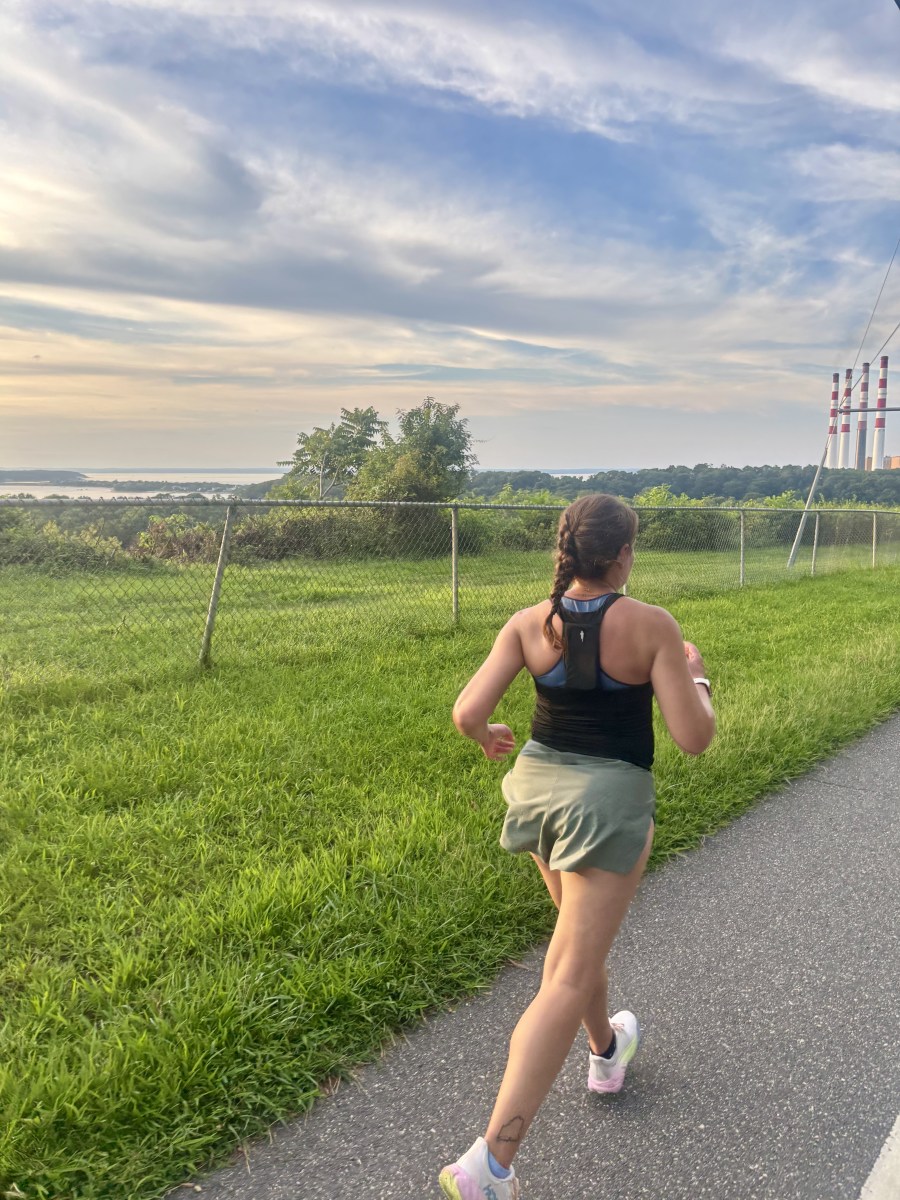
Despite working out constantly, I was running a little under 20 miles a week and couldn’t shake the sluggishness. Still, I kept going. I practiced the 10K course almost every week, hoping it would eventually start to feel easier.

It never did.

Actually, I felt worse each time.

Then my Achilles started hurting. Naturally, I immediately blamed the ten pounds I’d gained. I don’t know whether that had anything to do with it, but I was already feeling bad about my body, so that was where my brain went.

Working out had helped me mentally, but physically, I was worn down. I hadn’t given my body any chance to catch up. I finally decided to take a much easier week as a taper going into the race.

Still, I wondered whether a few easier days could undo weeks of pushing myself close to burnout.

I had trained for the race, but I didn’t feel completely prepared. All those slow, sluggish miles had affected my confidence. Even so, I was aiming to average under an 8:30 pace.

My biggest problem in races is that I tend to go out way too fast, so I knew I had to control myself during the first mile. That mattered even more on this course because mile two included the infamous uphill the race is known for.

I ran the first mile in 7:53.

A little faster than planned, yes, but nowhere near my usual opening-mile blowout. Since I already expected mile two to be slower because of the hill, I figured the two would balance each other out.

By mile three, I had settled in and was right around my target pace.

Then I started losing it.

Maybe I could have held on if I hadn’t been training so close to burnout. Maybe I needed more mileage, or faster mileage, or simply more time for my body to recover from the relapse.

There were plenty of possibilities to spiral about while actively trying to run a 10K.

About three-quarters of the way through the race, I knew my original goal was slipping away. I adjusted my race plan and tried not to let it get into my head. Mile five ended up being my slowest mile, even slower than the one with the infamous hill.

Rude.

I still refused to completely give up. Through the final mile, I kept myself at more of a tempo effort and wouldn’t let myself slow to a walk or fall into what I call the Sweeney Shuffle. That’s when my body is technically moving forward, just without any real sense of urgency.

If I wasn’t going to hit my original goal, I was at least keeping my overall pace under nine minutes.

I finished with an average pace of 8:43 per mile. My time was about two minutes slower than the year before.

It wasn’t what I wanted.

I tried not to be disappointed, but honestly, it was hard. Then I had to ask myself what I had really expected. Did I genuinely think my body would be back in peak shape after everything I had put it through?

Race day also happened to mark 30 days without alcohol or kratom. My body was still recalibrating, and no amount of impatience was going to change that. The finish time wasn’t what I wanted, but reaching 30 days and recommitting to my sobriety mattered more.

My body wasn’t back yet. It also wasn’t stuck.

It was recovering.

Maybe my comeback wasn’t happening as quickly as I wanted, but it was happening, and I had to learn to be okay with that. I also learned that I couldn’t force my body to recover faster by pushing it harder.

As it turns out, the body does not respond to bullying.

Some things simply need time.

So, I’m going to keep moving in this direction. Maybe I’m not hitting all my race milestones yet, but I’m hitting sober milestones again.

For now, that is enough.

I’ve found my footing, and I refuse to move backward.

Only forward, no matter the pace.
Breaking Free: 30 Days Without Kratom

Alright, let’s talk about that plant—the one I won’t shut up about because it completely took over my life. I’m 30 days into quitting it, and let me tell you, PAWS (Post-Acute Withdrawal Syndrome) is apparently a thing with this stupid plant. And it sucks. It really does. The initial high of quitting is gone, and so is the high of sharing my story with everyone. But I know it’s still important to talk about, especially when so many people have no idea what it even is.

Kratom. The “all-natural” miracle plant that’s marketed as the answer to everything: stress, energy, motivation, chronic pain, bad hair days, existential dread—you name it, and there’s someone out there hyping it up. If you believe the sales pitch, it’s like the Swiss Army knife of life hacks. But the reality? It’s more like a knockoff Prada bag from Canal Street. It might look legit at first, but give it time, and you’ll realize it’s just a cheap fake that falls apart and leaves you worse off than where you started.This is just some food for thought—and honestly, mostly a reminder for myself. Because this sucks. But it’s worth it. And it’s worth talking about.

Let’s get one thing straight: Kratom isn’t just some innocent little plant that stumbled out of the forest to save humanity. It’s not a cup of tea or a yoga class. It’s a substance that binds to your opioid receptors. Yea….those same receptors that heroin and prescription painkillers latch onto. Now, I’m not saying Kratom is exactly the same as those heavy hitters, but let’s be real—if it’s knocking on the same door as opioids, it’s not here to sell Girl Scout cookies. It’s here to screw with your brain chemistry. At first, it feels like a cheat code for life. You take a dose, and suddenly you’re awake, focused, maybe even a little zen. You’re thinking, Shit, this is amazing. Why didn’t I try this sooner? But here’s the thing: Kratom isn’t creating anything new. It’s not generating energy or happiness or motivation out of thin air. All it’s doing is poking your opioid receptors and tricking your brain into dumping out its reserves of dopamine, serotonin, and endorphins. And while that feels great in the moment, it’s basically like emptying your fridge and eating all the snacks at once. Sure, you’re satisfied for a hot second, but now you’re out of food and probably feeling a little guilty.

Here’s where Kratom really starts to show its true asshole nature. After that initial high, your brain realizes it just got robbed. It’s like, Oh crap, we’re out of dopamine? Better cut production to make sure this doesn’t happen again. So now your baseline levels of happiness, energy, and motivation are lower than ever. You wake up feeling foggy, restless, and about as functional as a soggy piece of bread. And what’s the only thing that seems to help? Yea, you guessed it—more Kratom.And that’s how it traps you. It’s not just messing with your brain—it’s rewiring it. The more you take, the more dependent you become. You’re not chasing a high anymore; you’re just trying to feel normal. And the doses? They keep getting bigger. The effects? They keep getting weaker. The side effects? Oh, they’re having a goddamn party. Nausea, brain fog, exhaustion—it’s like Kratom is throwing a rager in your body, and you’re stuck cleaning up the mess.

If you’re anything like me, this is the point where you start bargaining with yourself. Maybe I just need to switch strains. Maybe I need to time my doses better. Maybe I need to switch back from extracts to capsules. Well… none of that’s going to work. You’re not going to outsmart Kratom. It’s already ten steps ahead of you, laughing its leafy little ass off while it drains you dry. At some point, you’ll hit the wall. You’ll take your usual dose, and… nothing. No energy, no focus, no relaxation. Just nausea, exhaustion, and the creeping realization that you’ve been played. You’re not even taking it to feel good anymore—you’re taking it to avoid feeling worse. And that’s when it hits you: Kratom isn’t helping. It’s hurting. It’s not giving you anything. It’s stealing everything.

Here’s the cold, hard truth: Kratom will never satisfy you. It doesn’t matter how much you take, how carefully you time your doses, or how many Reddit threads you read about “strain rotation” and “tolerance breaks.” It will never be enough. Because it doesn’t have anything to give. It’s not a source of energy or happiness or motivation. It’s a parasite. It takes what’s already yours, drains it, and then sells it back to you in weaker and weaker doses. That boost you’re chasing? That was your natural energy. That calm you’re looking for? That was your body’s ability to relax on its own. Kratom didn’t create any of it—it just stole it, and now it’s holding it hostage. And the longer you stay on this ride, the worse it gets. Higher doses, shorter effects, more side effects. Until one day, you’re left with nothing. No energy. No motivation. No joy. No money. Just an exhausted, dependent body that doesn’t even feel like you anymore.

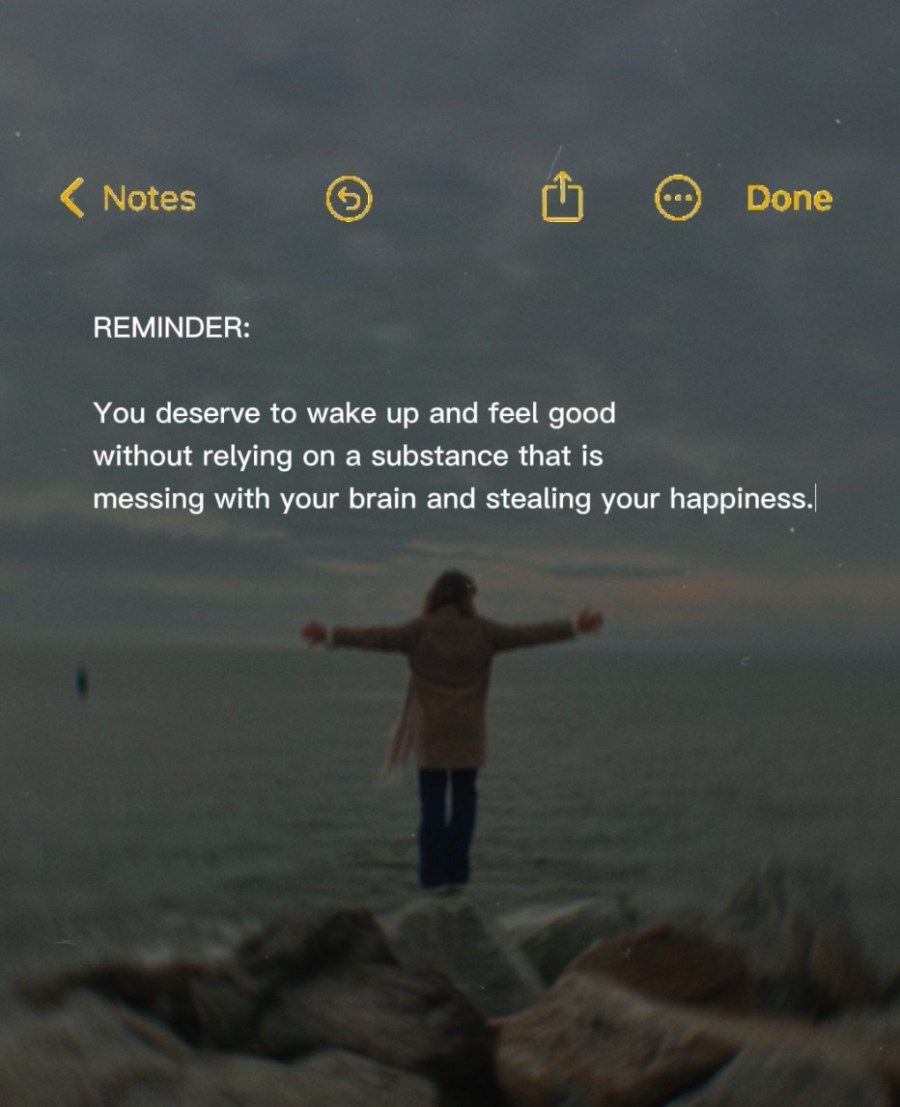
Look, I’m not gonna sit here and pretend walking away from Kratom is easy. It’s not. It’s hard as hell. But staying on this path? That’s a guaranteed dead end. And you deserve better. You deserve to wake up and feel good without relying on a substance that’s messing with your brain and stealing your happiness. So here’s the plan: take a deep breath, flip Kratom the bird, and start taking your life back. It’s not gonna be pretty, and it’s definitely not gonna be fun, but you’re worth the effort.

Why I Fired my Psychiatrist

It’s difficult to evaluate a psychiatrist during a 50-minute session — and then decide whether to see them again — when the real value of the relationship may come years and hundreds of sessions later. This problem becomes even more compounded because you rely on this person in order to get the medication you need to function like a halfway normal person. 

Nobody brags about needing to be on anti-depressants. In fact, it’s still something that people feel the need to be hush. Because no one wants to be a failure, and the world has made it clear that people who are on antidepressants are somehow weak, even though it’s no more different than someone who might be prescribed insulin for diabetes. The truth is, sometimes our brains need a little help too.  But that’s another thought for another time… what I wanted to talk about today is what to do when your relationship with your Doctor goes south (In a sense though, both topics go hand and hand).

There are no referees in the room; it’s just you, your psychiatrist, and whatever problems you’re facing or want to unpack. Sometimes, the relationship starts out great but erodes over time or lingers for years without inertia, or you call it off for small, seemingly silly reasons. And sometimes, there are incidences that lead to only one course of action. FInding a psychiatrist is hard. Finding one who takes your insurance is even harder. I had spent a little over 2 years with who I thought was the right Dr. I mean, we went through a fricken pandemic together, I thought we’d be in it for the long haul. I was wrong. 

I had so much invested in the relationship at this point—money, time, and my innermost demons—that I didn’t want to rewind my progress or start over from square one. So when things got particularly nasty over an insurance situation I was hesitant to leave at first. 

The problem was that she was out of network, but we had taken care of this issue right when I had begun seeing her. We had put in for a preauthorization to see her, which was approved by my insurance. At some point, I’m not sure when it was no longer approved by my insurance. There was some back and forth on this and we had both tried talking to my insurance and that is when things got nasty. The insurance company insisted it was because she had never put in for a new renewal for my visits and when I told her this she would get defensive and told me I wasn’t saying the correct things to the insurance company and that it was my fault. 

I never felt like I could talk to her about the situation without being demeaned or being accused of doing something wrong. She told me several times that I wasn’t doing what she asked me to do but I never knew what that meant or how to respond because what she was telling would contradict the insurance. In one particular nasty text message, I got scolded for not getting the first and last name of the person I spoke with about my insurance. When I told her, they only provided a first name she scoffed at me. Later, when I inquired with my insurance on this they told me it was in fact a violation to give out first and last names. 

I was crushed by her comments and stunned by how mean and insensitive she was being. After all the work we had done together around my issues, how could talk this way to me? It seemed like a cruel joke or a very insensitive mistake. I spent days agonizing over her text messages and every time she would reach out to me, it would end with me in tears and having a panic attack. Finally, it got to the point where I told her, I would do my best to try and figure this out, but afterward, we should end our relationship together. It wasn’t healthy for me and it was causing me distress and panic attacks. I won’t go into detail on how she responded to that, but spoiler alert, it was not well. 

We ended up having one last “session” together because I think she realized that some of the stuff she was sending over text messages was not the most secure. The session ended with me in tears and slamming my laptop on my virtual appointment. I was happy I stepped away, but it left me feeling very shaken. I knew I had to end this toxic relationship, but now I also had to figure out how I was going to get my medication. 

I was walking around trying to process it for weeks. Everybody I had talked about the situation to or shown the messages to were stunned. Luckily, I have a very good relationship with a therapist I’ve seen off and on for years. We set up a meeting to come up with a new game plan for my mental health. Unfortunately for me, not being on medication is not an option. A fact I still sometimes still have problems coming to terms with. I eventually came up with a solution for my situation because I really had no other choice- but it’s not ideal.  

It empowering however and kind of cathartic to walk away. Often, it can be tempting to just resign ourselves to an inadequate level of support. We’ve been taught to never question the competence of our clinicians, without realizing that they aren’t always a good fit. You deserve a  physiatrist or therapist that you like, respect, and who makes you feel good. If who you are seeing does none of these things for you, don’t settle for less. You are allowed to “fire” your physiatrist. And if it could improve your health, there’s no good reason not to.

❤ Sweeney

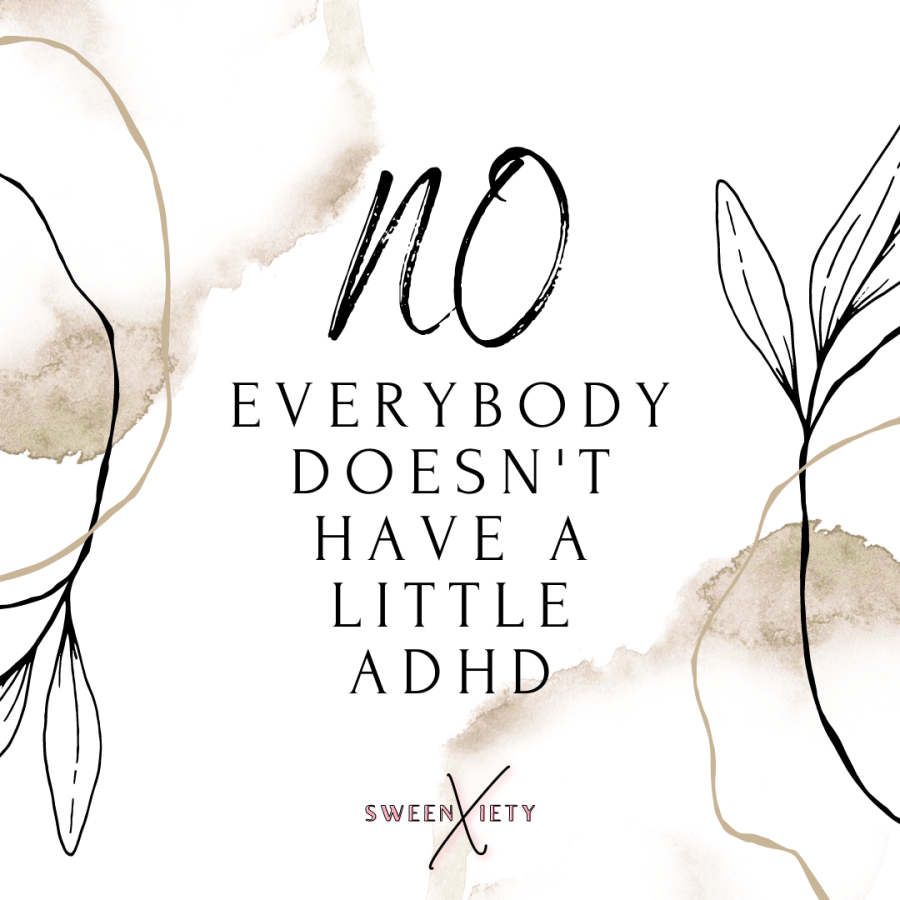
Everybody Doesn’t Have a Little ADHD

Just reading the term “ADHD” elicits imagery of the little boy who cannot sit still in class… you know the one. The annoying kid who gets in trouble for not paying attention in class and getting distracted by squirrels. If you do not fit the the preconceived stereotype of what people think ADHD is, then there can’t be anything wrong with you because I mean… who doesn’t get distracted every once and while?

These outdated stereotypes especially affect woman. So many girls/ woman go undiagnosed because we don’t show symptons the same way as our hyperactive male counterparts, Leading us to feel hopeless, ditzy, dumb, depressed and/or anxious. Sounds fun right?

I have been in and out of therapy for anixiety, depression and even substance abuse for yearsssssss and I have been on almost every type of ant-depressent under the sun. Guess what I was never diagnoised with until the age of 33? A diagnoisis that literally makes all the other things I went to therapy for make sense…. oh yea ADHD. Now, the more I read and find out about ADHD I find that there are so many woman in the same position I am. We’re part of the late diagnosis club.

Getting this diagnosis was so liberating for me. In a weird way I was actually excited to tell people, almost as if it provide them with as much of an A-HA moment for them as it did me. Like… OH that’s why Kristen is the way she is, huh? I’m not really sure why I expected this or for people to care, but it honestly felt important to me to share. Instead I was met with confusion and blank stares. “Everybody has a little ADHD” I was told. I wanted to literally wanted to scream. Like this thing that has impacted every part of my life boils down to just being a little distracted sometimes?

SO what does ADHD looks like in adults anyways?… Well here are some of the symptoms:

  • Impuslsitivy & Resltlessness
  • Low Frustration Tolerance
  • A hard time reading
  • Daytime sleepiness
  • Multitasking issues
  • Poor prioritisation
  • Missing deadlines
  • Disorganization
  • Putting off tasks
  • Hyper focus.

Just to name a few. The best way I can describe it is feeling chronically overwhelmed. It’s exhausting and I’m far past being just tired. Luckily I’m taking steps to try to manage and better understand my diagnosis, but if the meantime ya’ll could stop gaslight… that would be great, thanks.

❤ Sweeney

Virtual Medication Management

Listen, nobody wants to be on anti depressants but I am one of those people who truly believes some people need to be on them. Anti-depressants get a bad rap, and like depresssion itsef, are highly stigmatized. Listen to me carefully though… it is NOT giving up to take medication. Got it? Good. No pill shaming here!

I actually am a huge advocate of holistic health and alternative medicine. However, for me it did not help with my anxiety or depression. If you decide to take that route, great, just make sure you talk through your options with a professional. 🙂 Which brings me back to the subject of this post… Virtual Medication Management.

So I’ve been on and off anti-dressants for the better part of my early adult life (early 20’s-30’s) and I have been through my fair share of trial and error, dose adjustments ect. Its a very personal journey and never one I thought I’d be taking online during a pandemic!!! After I quit drinking and started to really take of myself I made it a point to stabilize my medication. I actually had no idea at the time what Doctor has even initially pescribed me the medication I had been on for years. When I would get a text from my phramacy that I needed a refill I’d just cross my fingers that one would go through.

I finally found a doctor I liked and so we started working together to evaluate what I was currently on, if it was the correct thing and how to manage my anxiety and depression. Fast forward to the mess that is 2020 and we’re still working together, only now its virtually. The hardest thing for me isn’t not seeing my doctor face to face though, that part is actually pretty easy. It’s navigating how effective my medication is during a pandemic. I really should’ve titled this “Medication Management…during a Pandemic” but I’ve used the “…during a Pandemic” tag line for like my 5 last posts. So it is, what it is and what it is…is fricken hard.

0 out of 5 stars I do not recommend adjusting your medication during a pandemic, unless its necessary and for me it is. It’s like how am I supposed to know if I am having medication side effects or pandemic induced depression? Am I more anxious now because I started a new job or because my medication sucks? Its can be hard to interpret your mood when so much is going on in the world and your life. The key is knowing that a pill is not magically and will never fix everything. I’ve started to become more intutitve when it comes to knowing what is normal anxiety vs. the type I need to address with my doctor. Of course thats a little harder to decipher with everything going on, but all I can do is try.

And at the end of the day that is all any of us can do… try. So whether you’re on anti-depressants or not… clinically depressed or situationally depressed, anxious or numb just try (I know it’s not that easy). Reach out to a friend, reach out to family or work with a professional because its more important now than its ever has been. It is not a waste of time. It is essential.

❤ Sweeney