
Featured

Comparing Addictions: Alcohol vs. Kratom

Having recently relapsed on alcohol, I was starkly reminded of just how bad a drunk I am. Seriously, it’s a spectacle. I turn into a walking emotional liability. I already cry a lot. Drinking just makes it less optional.

Having said this, you’d probably expect me to say alcoholism is worse than kratom… especially since most people don’t even know what kratom is (though thankfully that’s starting to change). But honestly? I don’t know which is worse. It doesn’t really feel like picking sides, more like comparing two very different kinds of mess.

Immediate vs. Gradual Consequences

Alcohol hits hard and fast. The fallout shows up right away—fights with friends and family, trouble at work, even run-ins with the law. My relationship with drinking left a trail of damage. I didn’t wake up one day suddenly addicted, but the consequences showed up long before the real spiral began.

Kratom is slower. It sneaks in, almost quietly. It didn’t wreck my friendships, but it did put a real strain on my marriage. I didn’t lose jobs or end up in court, but I did dig myself into financial holes and carry around a lot of emotional weight.

If I had to compare the two, alcohol feels like a panic attack—loud, chaotic, impossible to ignore. Kratom is more like chronic depression—quieter, heavier, and easier to hide in the moment. Neither is a good option. You just don’t get a prize for surviving one over the other.

The Jekyll and Hyde Effect

Kratom never really changed who I was. Alcohol, on the other hand, turned me into a full Jekyll-and-Hyde situation. With kratom, it wasn’t that—I was still me—but it dragged me into a depression so deep it ate away at everything. Alcohol blew things up right in front of me, but kratom was the loneliest experience I’ve ever had. Try explaining to people that you’re falling apart because of something they’ve never even heard of. At least with alcoholism, people recognize the word.

When I did open up, friends would shrug and say, “Well, at least it’s not alcohol.” And I’d sit there thinking, “Yeah… I guess?” It’s strange, comparing one addiction to another, like I’m weighing them on a scale. But that’s the reality—two completely different nightmares, and somehow I lived through both.

Quitting: A Tale of Two Addictions

When I quit drinking, I pushed through the first 24 to 48 hours and then I was basically fine. No AA, no sponsor—just therapy, willpower, and vibes. was so determined that being around alcohol didn’t even faze me. When I decided I was done, I was done.I almost checked into rehab once, but I freaked out during detox and left. I wasn’t ready yet, and I knew it.

Kratom was a whole different beast. Even when I was ready—really ready—my determination meant nothing. Quitting felt like actual hell. I only went cold turkey once, on my honeymoon of all times, and it was a nightmare. Sweating, depression, insomnia, restless legs, the full package. Truly a romantic getaway.

And the fun didn’t stop there. Once the physical part was over, my serotonin and dopamine were basically in shambles. About 30 days later it somehow got worse, thanks to PAWS (Post-Acute Withdrawal Syndrome). I got stuck in a cycle of quitting and relapsing on kratom, even while on Suboxone, which is not a great place to be. It made me feel like a hardcore addict for something you can buy at 7-Eleven.

Eventually, I got so fed up with the cycle that I went back to alcohol. Not exactly a gold-star decision, but it forced the kind of intervention I needed. So, do I regret it? Not completely.

The Trolls Come Out

Once people started to learn about kratom, the trolls emerged. They made it seem like we were trash for getting addicted to something from a gas station. Just to clarify, that’s not where I picked up my kratom habit, but once I needed more and more, the convenience of smoke shops and gas stations became my go-to. I felt like people thought I was trashy for being addicted to it. The irony is that kratom is marketed as a “healthy” alternative—to coffee, to alcohol. A mood boost, a little energy, a better option than drinking. Perfect bait for someone like me, just looking for relief. In reality, what they did was target vulnerable people, call it wellness, and cash in when they get addicted.

Then there are the pro-kratom advocates, which makes navigating this whole situation even trickier. The substance has had such a profound negative impact on my life while seemingly being positive for others. For the record, I don’t think kratom shouldn’t be banned, but it definitely needs regulation, especially extracts like “Feel Free” and “7-Oh.”

Final Thoughts

So while I’m mostly focusing on kratom since that’s what’s fresh in my mind, I can’t forget that I did recently relapse on alcohol. It took five years to get there, and strangely, that’s part of why I feel more solid in my sobriety now. I don’t have that voice in my head anymore—the one that used to wonder if maybe I could drink again someday and be fine. I can’t.

Alcohol created reckless situations that kratom never did. But kratom drained me in a different way. It left me hollowed out, with suicidal ideations I had never felt before, which was unsettling after all the progress I’d made once I quit drinking.

This comparison doesn’t really give me an answer. It just reminds me that addiction, in any form, strips you down until there’s not much left.
Breaking Free: 30 Days Without Kratom

Alright, let’s talk about that plant—the one I won’t shut up about because it completely took over my life. I’m 30 days into quitting it, and let me tell you, PAWS (Post-Acute Withdrawal Syndrome) is apparently a thing with this stupid plant. And it sucks. It really does. The initial high of quitting is gone, and so is the high of sharing my story with everyone. But I know it’s still important to talk about, especially when so many people have no idea what it even is.

Kratom. The “all-natural” miracle plant that’s marketed as the answer to everything: stress, energy, motivation, chronic pain, bad hair days, existential dread—you name it, and there’s someone out there hyping it up. If you believe the sales pitch, it’s like the Swiss Army knife of life hacks. But the reality? It’s more like a knockoff Prada bag from Canal Street. It might look legit at first, but give it time, and you’ll realize it’s just a cheap fake that falls apart and leaves you worse off than where you started.This is just some food for thought—and honestly, mostly a reminder for myself. Because this sucks. But it’s worth it. And it’s worth talking about.

Let’s get one thing straight: Kratom isn’t just some innocent little plant that stumbled out of the forest to save humanity. It’s not a cup of tea or a yoga class. It’s a substance that binds to your opioid receptors. Yea….those same receptors that heroin and prescription painkillers latch onto. Now, I’m not saying Kratom is exactly the same as those heavy hitters, but let’s be real—if it’s knocking on the same door as opioids, it’s not here to sell Girl Scout cookies. It’s here to screw with your brain chemistry. At first, it feels like a cheat code for life. You take a dose, and suddenly you’re awake, focused, maybe even a little zen. You’re thinking, Shit, this is amazing. Why didn’t I try this sooner? But here’s the thing: Kratom isn’t creating anything new. It’s not generating energy or happiness or motivation out of thin air. All it’s doing is poking your opioid receptors and tricking your brain into dumping out its reserves of dopamine, serotonin, and endorphins. And while that feels great in the moment, it’s basically like emptying your fridge and eating all the snacks at once. Sure, you’re satisfied for a hot second, but now you’re out of food and probably feeling a little guilty.

Here’s where Kratom really starts to show its true asshole nature. After that initial high, your brain realizes it just got robbed. It’s like, Oh crap, we’re out of dopamine? Better cut production to make sure this doesn’t happen again. So now your baseline levels of happiness, energy, and motivation are lower than ever. You wake up feeling foggy, restless, and about as functional as a soggy piece of bread. And what’s the only thing that seems to help? Yea, you guessed it—more Kratom.And that’s how it traps you. It’s not just messing with your brain—it’s rewiring it. The more you take, the more dependent you become. You’re not chasing a high anymore; you’re just trying to feel normal. And the doses? They keep getting bigger. The effects? They keep getting weaker. The side effects? Oh, they’re having a goddamn party. Nausea, brain fog, exhaustion—it’s like Kratom is throwing a rager in your body, and you’re stuck cleaning up the mess.

If you’re anything like me, this is the point where you start bargaining with yourself. Maybe I just need to switch strains. Maybe I need to time my doses better. Maybe I need to switch back from extracts to capsules. Well… none of that’s going to work. You’re not going to outsmart Kratom. It’s already ten steps ahead of you, laughing its leafy little ass off while it drains you dry. At some point, you’ll hit the wall. You’ll take your usual dose, and… nothing. No energy, no focus, no relaxation. Just nausea, exhaustion, and the creeping realization that you’ve been played. You’re not even taking it to feel good anymore—you’re taking it to avoid feeling worse. And that’s when it hits you: Kratom isn’t helping. It’s hurting. It’s not giving you anything. It’s stealing everything.

Here’s the cold, hard truth: Kratom will never satisfy you. It doesn’t matter how much you take, how carefully you time your doses, or how many Reddit threads you read about “strain rotation” and “tolerance breaks.” It will never be enough. Because it doesn’t have anything to give. It’s not a source of energy or happiness or motivation. It’s a parasite. It takes what’s already yours, drains it, and then sells it back to you in weaker and weaker doses. That boost you’re chasing? That was your natural energy. That calm you’re looking for? That was your body’s ability to relax on its own. Kratom didn’t create any of it—it just stole it, and now it’s holding it hostage. And the longer you stay on this ride, the worse it gets. Higher doses, shorter effects, more side effects. Until one day, you’re left with nothing. No energy. No motivation. No joy. No money. Just an exhausted, dependent body that doesn’t even feel like you anymore.

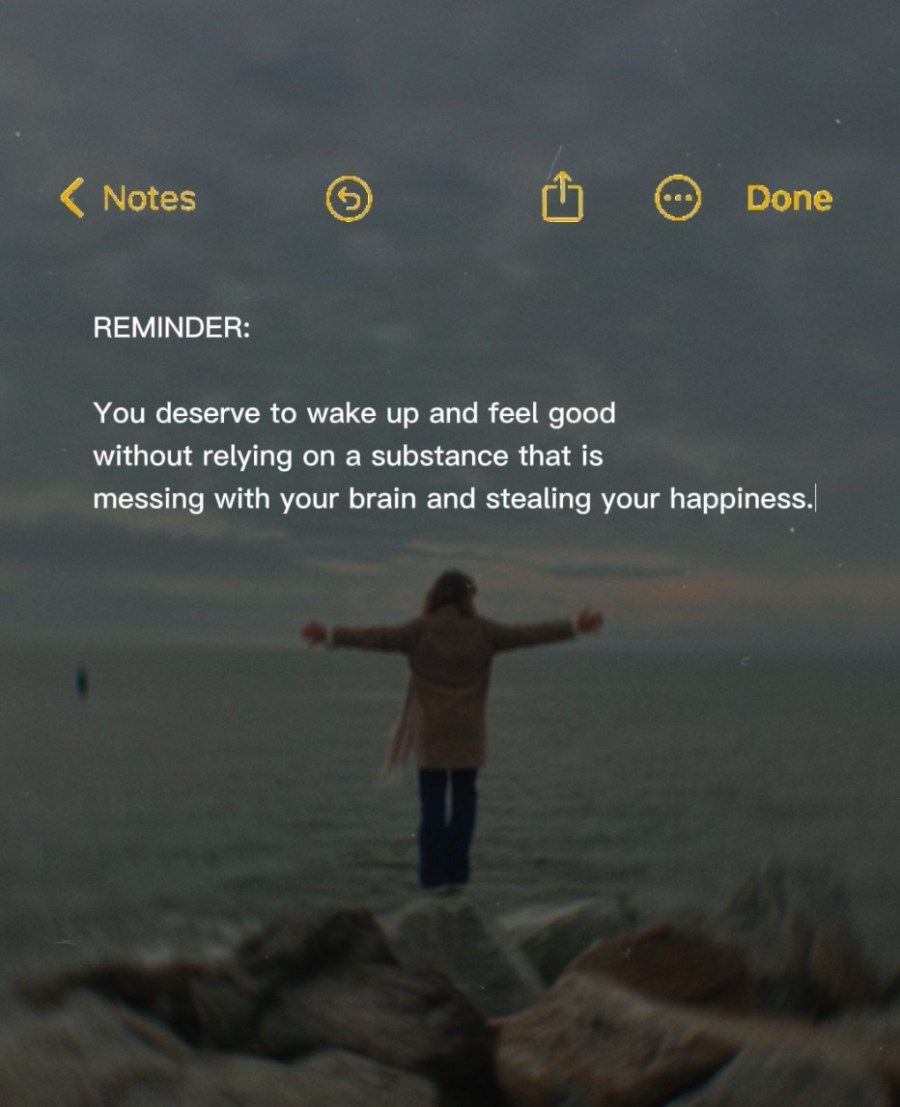
Look, I’m not gonna sit here and pretend walking away from Kratom is easy. It’s not. It’s hard as hell. But staying on this path? That’s a guaranteed dead end. And you deserve better. You deserve to wake up and feel good without relying on a substance that’s messing with your brain and stealing your happiness. So here’s the plan: take a deep breath, flip Kratom the bird, and start taking your life back. It’s not gonna be pretty, and it’s definitely not gonna be fun, but you’re worth the effort.

My Secret Addiction: How I Got Hooked on a “Wellness Tonic” (Part 2)

Well, it’s been a week since my last post, and I’m happy to report: I’m still off kratom/ Feel Free, officially making it past the one-week mark of my millionth quit. This time feels different, though—similar to when I finally quit alcohol for good. That same sense of finality is creeping in, and I’m cautiously optimistic.

Before diving back into my story, I want to make something clear: I’m not on some crusade to ban kratom. I don’t support prohibition, but I do think people need to know what they’re getting into. Personally, I’d say stay the fuck away. That’s just me. Also, I hold no ill will toward my local kava bar—they were pretty transparent about the product, and I still think it’s a great alcohol-free space for those who want an alternative bar scene.

The Physical Toll

Let’s talk about some of the other side effects I didn’t mention last time. Besides the puking, kratom wreaked havoc on my skin. I got massive styes all the time and dry patches around my mouth that made me look like I’d been licking sandpaper. I also developed a pain in my lower left abdomen, eerily similar to the one I had during my drinking days. And while kratom sometimes helped my workouts, other times it felt like my body was completely failing me. I’d have to stop mid-run, and my husband—who knows how fit I usually am—would look at me like, “What the hell is going on?” Fun times, am I right?

Another factor that fueled my addiction? ADHD. I was diagnosed in 2019, and while Adderall helped at first, it gave me heart palpitations. Plus, knowing my addictive tendencies, I needed to be careful with controlled substances. When I switched my medication management to somewhere that didn’t allow Adderall prescriptions, I leaned hard into kratom, convincing myself it was one of the few things that could help me focus and stay energized. I convinced myself it was my lifeline. Spoiler: it wasn’t.

The Suboxone Chapter

When I left off last time, I had just started medication-assisted treatment (MAT) with Suboxone. For those unfamiliar, Suboxone is often used to treat opioid addiction by reducing cravings and withdrawal symptoms.* (Fun fact: kratom isn’t technically an opioid, but it binds to the same receptors, which is why Suboxone can still help.)*

Choosing Suboxone felt like a big step—some might even call it extreme—but I was fully informed and ready. My therapist had seen me at my worst during my alcohol addiction, and he said the reason he suggested Suboxone was because he’d never seen so much panic and desperation in my eyes before. I’m thankful I went with someone who had a conservative approach. My highest dose was just 2mg (for context, the standard dose for severe opioid addiction is 16mg).

At first, Suboxone was a godsend. I was able to quit kratom with minimal side effects, and it led to my longest quit yet—2.5 months. So, what happened?

The Perfect Storm

Well, life happened. The company I was working for suddenly moved me to part-time because they couldn’t afford a full-time marketer anymore. It wasn’t the worst thing at first—I applied for unemployment and spent my extra time job-hunting. But here’s the thing: I have never had an easy time holding down a job. During my drinking days, I’d get fired or quit constantly. After I quit alcohol, I’d finally landed some decent jobs, but thanks to COVID and layoffs, they all had short shelf lives.

When I lost my full-time role, I found myself with way too much idle time on my hands. And idle time, for me, is dangerous. I slipped back into kratom to keep myself motivated to do anything. At first, I’d take it during breaks from Suboxone, but eventually, I started taking them together. Yes, I know how insane that sounds. Suboxone is designed to block the effects of opioids (and, in theory, it should block kratom’s effects too), but I somehow convinced myself I’d still get the energy and focus—even if the euphoria was gone. Turns out, my brain is a liar.

Eventually, I landed a new job, but it came with a $17,000 pay cut. I took it out of sheer desperation, needing something—anything—to get back into a routine. Financially, it was a huge hit, and even though I was working again, I couldn’t keep up with my kratom habit. But that didn’t stop me. I started using money-borrowing apps like MoneyLion, sometimes juggling five at once. I opened a new credit card. I constantly asked my husband to help cover my overdrawn account—probably $1,000–$1,500 a month. I told him it was because my new salary couldn’t cover our bills. But I knew the truth.

Desperate for something better, I jumped at the first higher-paying opportunity I found. I ignored some glaring red flags—like the fact they didn’t want me to give a two-week notice at my current job—and took it anyway. It ended up being one of the worst culture fits I’ve ever experienced. The environment was toxic, the demands were either overwhelming or, worse, didn’t make sense. There was no proper training, I wasn’t even provided the tools I needed to do my job (like logins for the Instagram account I was supposed to manage), and the limited time off added to the frustration. I felt completely out of place—disheartened and defeated.

Between the pay cut from my previous job and the terrible fit of the new one, I was spiraling. I felt like I was going nowhere. My husband and I had been dreaming of buying a house, but here I was, drowning in debt, unable to go a week without borrowing money, and stuck in jobs that either didn’t pay enough or crushed my spirit. I felt so behind in life—like I’d never catch up.

The Mental Toll

I tried to quit Feel Free a few more times, but I always slipped back into my old habits by week two. Around this time, I started learning about PAWS (Post-Acute Withdrawal Syndrome). PAWS refers to withdrawal symptoms that kick in after the initial detox phase, typically within the first few weeks of sobriety, and can last for months—or even years. Symptoms include insomnia, anxiety, depression, fatigue, and irritability. It’s caused by brain chemistry changes from substance dependency, as your brain struggles to recalibrate without the substance.

Looking back, I’m pretty sure PAWS was a huge factor in my relapses. My quits usually lasted 1–4 weeks before the crushing depression would hit and send me spiraling back. It’s like your brain convinces you that the only way to feel “normal” again is to go back to the substance.

The depression was unbearable. I already have anxiety and ADHD and am prone to bouts of depression, so piling kratom withdrawal on top of that was a dangerous combo. I felt hopeless. There were days I genuinely didn’t think I could do it anymore. I wouldn’t say I was suicidal—death scares the shit out of me—but I did have passing suicidal thoughts. That should’ve been a wake-up call, but instead, I just kept spiraling.

Hitting Rock Bottom (again)

Between the toxic job and my kratom addiction, I hit my lowest point of isolation and depression. My husband started getting suspicious—why was I still asking for money when I had a new job? I felt like I was failing him. We’d been dreaming of buying a house together, but here I was, drowning in debt and unable to go a week without borrowing money. I felt so behind in life. Between this and my alcohol addiction, I was convinced I’d never catch up.

Only a few people knew I was still struggling with my addiction. It’s not like alcohol, where the problem is obvious to everyone around you. With kratom, I seemed totally normal to most people—if anything, they just noticed an uptick in energy. But the crashes, the depression, and the financial ruin? Those were harder to hide.

Once, I accidentally threw a full bottle of kratom into a public trash can. An hour later, I realized what I’d done and stuck my hand into the trash to fish it out. Because when you’re addicted, every $10 bottle counts.

The Turning Point

A week ago, I finally told my husband the truth. I had been planning to tell him for a while, but I kept putting it off, holding onto something he had said months earlier. In a moment of frustration, he told me he would never be able to understand if I relapsed again, especially after everything I knew about what kratom had done to me. I stewed over that offhanded comment for months, convinced I couldn’t tell him. But mostly, I think I was using it as an excuse.

My husband is literally one of the kindest people I know and has always tried so hard to be my rock. I think his comment came from a place of frustration and anger at what this product has put me through. He hates it because of how much pain it has caused me, and I don’t think he ever meant for his words to weigh so heavily on me. Of course, he also had no idea that I had already relapsed—multiple times.

Finally, during a drive to a family house for the weekend, I saw the opportunity and took it. I told him the truth. He was upset, understandably, but mostly he was supportive. We came up with a game plan to quit once and for all.

For me, disrupting my routine has always been key to quitting. Going away for the weekend was the perfect opportunity to break the cycle. I had a few Suboxone strips left and an upcoming appointment with my doctor. I’m hoping it’ll be my last.

Moving Forward

For the first time in years, I feel hopeful. My husband and I are working on a plan to get our finances back on track. I’ve also set up an appointment with my therapist to work through the anxieties and issues that make me so vulnerable to addiction.

Addiction is a sneaky bastard. Kratom and Feel Free promise energy and euphoria, but at what cost? For me, the cost was financial ruin, damaged relationships, and a mental health nosedive.

If you’re struggling, please know you’re not alone. Recovery is messy, but it’s worth it. If you’re struggling, please know you’re not alone. Recovery is messy, but it’s worth it. And if you’re considering kratom or spot those blue bottles at your local 7-Eleven? My advice: stay the fuck away.

Resources for help below