


May 21st was supposed to mark my 6-year soberversary from alcohol. Instead, I’m acknowledging a different milestone—about one month since my unexpected relapse. And trust me, no one was more surprised by this plot twist than I was.
What led to this unexpected detour? Well, it turns out my kratom addiction (which I’ve written about before) completely wrecked my body chemistry. When I finally quit kratom, my serotonin levels absolutely tanked. And I don’t mean just a little dip—I mean the lowest I’ve ever felt in my life.
On paper, my life was fine—great, even—but I felt worse than I ever had in my entire life. And I’ve been on antidepressants for years, so that’s saying something.
I later discovered I’m not alone—in recovery groups I’m part of, kratom users report suicidal ideation with alarming frequency, both while using and especially during withdrawal. The mental health impact of this substance is seriously underestimated.
For those unfamiliar, PAWS (Post-Acute Withdrawal Syndrome) is the gift that keeps on giving after you quit certain substances. Your brain chemistry goes haywire trying to rebalance itself, and it can last for months. Fun times.
In my infinite wisdom, I decided alcohol seemed like a safer alternative to going back to kratom. I told myself I could handle “just one” to take the edge off. Part of me even had been romanticizing my past reckless behavior, wondering if maybe, just maybe, I would be ok if I drank again one day.
What started as “just one drink to take the edge off” spiraled into a two-week bender. Maybe part of me thought that after almost six years, I could handle it. I couldn’t. The second alcohol hit my system, I became a completely different person—like Dr. Jekyll and Mr. Hyde, but with more drunk texting and fewer Victorian vibes.
I wish I could say I blacked out and don’t remember much, but no. I remember just about everything. And let me tell you, the embarrassment is strong. But in a weird way, I’m grateful for it. Seeing that version of myself again was a harsh but necessary reminder of why I quit drinking in the first place.
The truth is, I could have prevented this spiral if I’d been more honest—with myself, my doctors, and the people around me.
I had a suboxone doctor I’d only met with twice (virtually) who gave me way too many subs with little guidance. I was essentially making up my own dosing schedule (and often skipping doses because subs scared me). Meanwhile, I didn’t tell my regular psychiatrist about being on suboxone. I mentioned needing to up my antidepressants but didn’t explain why until it was too late.
I saw the train coming but didn’t move quickly enough to get off the tracks.
I’d gone on autopilot with my mental health—just going through the motions, not really engaging with the process or being honest about how I was truly feeling. That’s a dangerous place to be. Mental health requires constant vigilance and active participation, not passive management.
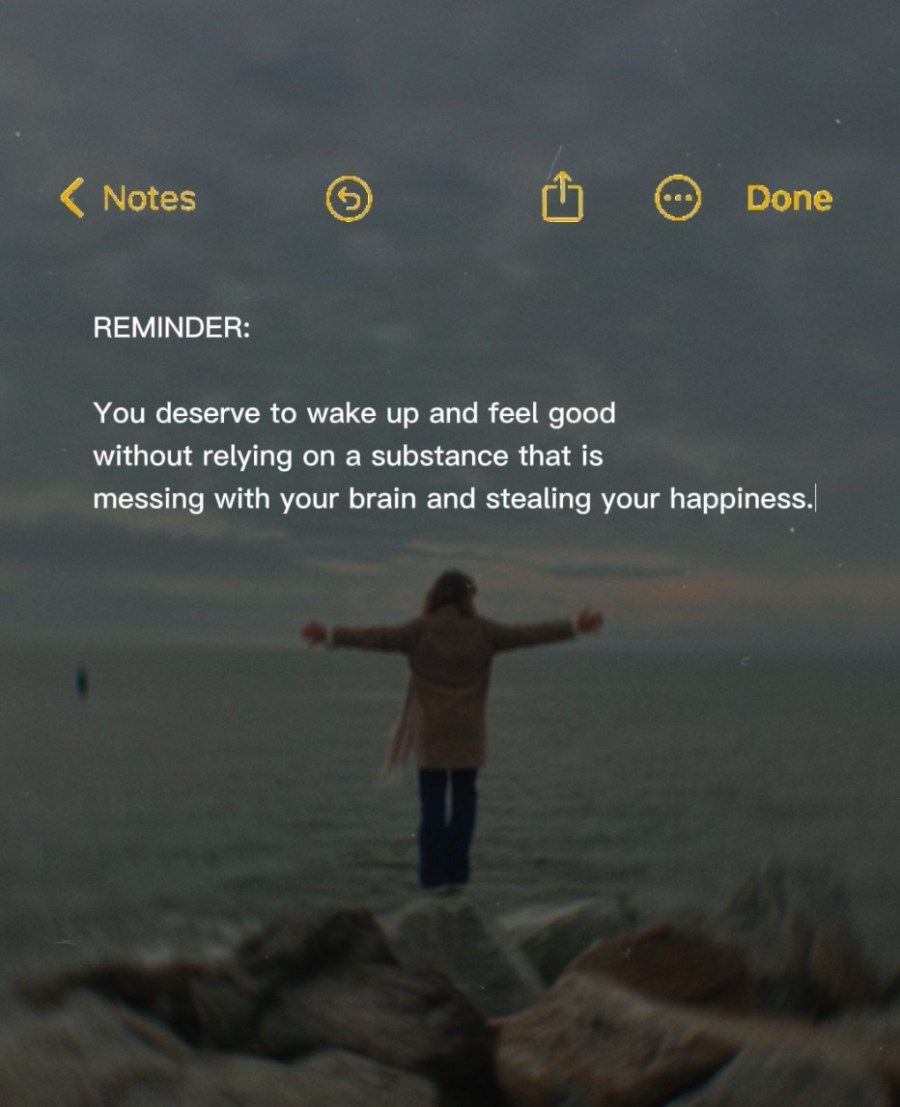
On the bright side—I’m about a month past that bender now, and I have zero desire to drink ever again. That little voice in the back of my head wondering if I could ever drink “normally” has been silenced for good.
I’m kratom and alcohol free, attending therapy more regularly, being transparent with my doctors, and I’ve adjusted my medication. The difference is night and day—I’m feeling 200% better. I’m not sure I’ve ever felt this… normal?
I also learned a lot about how people handle situations during this time. I’ve become extremely grateful to a handful of people who showed up for me in ways I never expected—especially my husband, who has dealt with quite a bit. Though I’m starting to remember that I too have a lot to offer and am deserving of that level of effort and compassion (even if I’m a little unhinged at times). When you’re vulnerable, it’s easy to let people into spaces they haven’t earned access to, but not everyone deserves that proximity to your healing process. And not everybody wants to be a part of it… and that is ok too. Find your people and move on. I’m so grateful to have found mine.
This experience taught me several important things:
- You don’t need to be embarrassed by being on antidepressants. It’s not big pharma just trying to drug me up—imbalances exist, and it’s ok if you need assistance to feel your best.
- I need to check in more with friends. I leaned heavily on some people during this time, and their support meant everything. But I also learned they were going through their own struggles—you truly never know what someone else is dealing with.
- I can control whether I have that first drink, but once alcohol is in my system, all bets are off. And I hate who I am when I drink, so it’s a hard pass from me.
- Never go on autopilot with your mental health. The moment you start disengaging from your own care is the moment things start to unravel.
Here’s the thing: relapse sucks. But it is a part of recovery. And when I did the math, I realized that if you include the six years from my original sobriety date and subtract those two weeks of my bender, I was still sober for 99.3% of that time. That’s pretty damn good.
So, I’m choosing to live without shame. I’m focusing on stabilizing, being honest, and just trying to be a good person. Here’s to starting the counter again. Regardless of the reasons or circumstances, I take full responsibility for my actions. Turning back to the bottle was a poor and unsafe choice—one I won’t make again.


 SweenXiety